
Buy Ammo by the Case and Lock In Serious Savings on Bulk Rounds
Have you ever found yourself scrambling for ammunition right when you need it most? Buying ammo by the case means purchasing a sealed bulk quantity—typically 500 to 1,000 rounds—that arrives ready to store and use over many range sessions. This approach simplifies your supply so you can focus on practice or preparedness, and the per-round cost is lower because you’re not paying for repeated small-box packaging. By keeping a case on hand, you eliminate last-minute trips and gain the peace of mind that comes from having a dependable reserve of cartridges exactly when you need them.
Why Buying in Bulk Changes Your Shooting Budget
Buying ammunition by the case fundamentally shifts your shooting budget from per-box sticker shock to a predictable, per-round cost. The primary change is immediate: case purchases typically drop the price per round by 10–25% compared to individual boxes, freeing up cash for more range time or higher-grade loads. This bulk approach also reduces the frequency of purchases, which cuts down on repeated shipping fees and the temptation of impulse buys at retail counters. Over a year, the savings compound, effectively giving you a free month of shooting. Your budget becomes more about upfront capital than recurring overhead. Q: Why does a case cost less per round? A: Because manufacturers and retailers pass on savings from reduced packaging, handling, and shipping logistics when you commit to a large, single order.
Cost Per Round: The Real Math Behind Case Purchases
The true financial advantage of ammo by the case emerges only when you calculate cost per round beyond the sticker price. Divide the case total by the round count, then add shipping, taxes, and any handling fees—this effective per-round figure often drops by 15–25% versus individual boxes. Factor in your average monthly range volume; if you shoot 200 rounds monthly, a 1,000-round case yields a five-month supply, making the upfront cash outlay a fixed, predictable expense. However, per-round savings vanish if you switch calibers or sell unused stock at a loss. Compare across three vendors using the same shipping tier, not just base pricing, to see the real math.

How Storage Logistics Affect What You Save

Buying ammo by the case only pays off if you can store it correctly, because **poor storage logistics quietly erase your per-round savings**. If you lack a dry, climate-controlled space, moisture and temperature swings degrade primers and powder, turning bulk discounts into wasted rounds you must replace at full price. Stacking heavy cases on weak shelving risks crushing boxes and damaging seals, forcing you to shoot compromised ammunition or toss it. Conversely, using sealed ammo cans with desiccant packs lets you buy during low-price windows without worrying about long-term degradation. Calculating your actual usable shelf life—not just the sticker price—determines whether that case saves you money or costs you more than buying boxes monthly.
Q: Do you need a gun safe to store bulk ammo safely?
A: No—a cool, dry closet or basement shelf inside sealed metal or plastic ammo cans works perfectly. The key is airtight containers, not a safe, so humidity stays out and your stored rounds stay reliable for years.
When a Case of Ammo Actually Pays for Itself
A case of ammo starts paying for itself the moment your round count crosses a predictable threshold. If you shoot 500 rounds a month, the per-box savings from case purchases—often 15 to 25 percent—quietly fund an extra box or two every trip. The real payoff kicks in during high-volume practice sessions: zeroing a new optic, running drills, or breaking in a rifle. At 1,000 rounds, the price gap between bricks and boxes covers a range trip’s gas and targets. When a case of ammo pays for itself, it’s because your training volume meets the bulk discount’s break-even point, usually within one to two range days. Beyond that, every shot costs noticeably less, making the upfront cost feel like a reloading session for your wallet.
A case of ammo pays for itself once your monthly round count crosses the discount threshold, usually within 1–2 heavy range sessions, turning bulk savings into free range trips and more trigger time.
What to Look for Before You Commit to a Full Case
Before committing to a full case of ammunition, verify lot consistency by buying a single box from the same production run and testing it in your specific firearm for feeding, extraction, and accuracy. Check the case’s packaging date and lot number, since older stock may have degraded primers or powder. Inspect the ammo’s physical dimensions—especially rim thickness and overall length—against your chamber’s tolerances, as full cases often come from bulk batches with wider variance. Calculate your actual round count needs against the case size (typically 500 or 1,000 rounds) to avoid overstocking a load you might tire of. Finally, confirm the bullet weight and profile match your existing zero; a full case is a poor way to discover a point-of-impact shift.
Test one box from the exact lot before buying the whole case—ballistics can change between production runs.
Store a sample unfired round for future cross-checking against replacement batches.
Headstamp, Lot Numbers, and Consistency Checks
Before you commit to a full case, give the headstamp and lot number consistency a quick once-over. Every box in the case should share the same headstamp—brand and caliber—plus an identical lot number, since different lots can vary slightly in velocity or point of impact. specialty sports & supply To check, open a few boxes from the top, middle, and bottom of the case, then compare the stamped markings and lot codes on each cartridge base. If anything mismatches, you risk zeroing your rifle for one load and getting surprises from another. A simple sequence:
- Peek at the case’s outer label for a single lot number.
- Pull three random boxes and verify their headstamps match.
- Confirm the printed lot on each box matches the case label.
Mismatched lots aren’t a dealbreaker for plinking, but they’re a red flag if you need consistent accuracy.
Box Count, Can Dimensions, and Weight You Can Handle
Before committing to a full case, scrutinize the **box count versus can dimensions** because a 500-round case might arrive in one bulky metal can or five compact cardboard boxes, drastically changing your storage footprint. Measure the actual can dimensions against your shelf, safe, or range bag; a military-style .30 cal can holds roughly 500 5.56 rounds but weighs over 30 pounds, while a 1,000-round crate of 9mm approaches 60 pounds. Always lift the sealed case at the store—if you cannot deadlift it into your vehicle or up a stairwell, split the purchase or choose smaller cans. Heavier cases with narrow handles are a back injury waiting to happen, so prioritize cases with reinforced grips or divisible inner boxes for manageable, transportable loads.
Corrosion-Resistant Packaging vs. Loose-Fill Options
When buying ammo by the case, the packaging format directly dictates long-term storage viability. Corrosion-resistant packaging, such as sealed foil bags or vapor-phase inhibitor liners, creates a micro-environment that blocks moisture 7.62×51 Ammo for Sale and oxygen, making it superior for humid climates or indeterminate shelf lives. Loose-fill options—rounds simply packed in cardboard or plastic trays—offer cheaper per-round costs and easier immediate access, but they expose primers and cases to fluctuating humidity. That trade-off makes loose-fill acceptable only if you plan to shoot the case within several months or have a dry, climate-controlled safe. For bulk storage beyond a year, follow this sequence:
- Inspect the case’s inner packaging for any barrier layer.
- Choose sealed bags if you cannot guarantee low humidity.
- Reserve loose-fill for rapid turnover or short-term bulk purchases.
Always prioritize the corrosion barrier over price if resale or long-term stockpiling is your goal.
Practical Ways to Rotate and Use a Large Ammo Stockpile
Buying ammo by the case saves serious cash, but only if you actually shoot it before it goes bad. The golden rule is first in, first out—stack new cases behind older ones and label each with the purchase month using a sharpie. For quick rotation, keep a “training case” open at the top of your stack, pulling boxes from it weekly for range work, then refill it from the oldest sealed case. Every quarter, crack open one case and shoot it down to zero, replacing it with fresh stock—this keeps your carry and home-defense rounds rotated out of the rotation entirely. Store cases on a sturdy shelf, not the floor, and inspect for corroded primers every six months so you don’t discover bad ammo mid-magazine
First-In, First-Out Strategies for Mixed Calibers
When your stockpile mixes calibers, First-In, First-Out rotation demands strict lane segregation. Dedicate a physical row or shelf per caliber, then pull from the front of each lane only after verifying the headstamp matches your immediate need. This prevents grabbing an older .223 while newer 9mm sits untouched. Label each case with its purchase month and caliber; when you shoot, reach for the oldest case in that specific lane, even if it’s behind a newer, shinier box. Caliber-specific rotation fails the moment you let convenience override the date stamp, breeding a silent backlog of aged primers across unrelated cartridges. For mixed lots, keep a simple log—caliber, date, rounds fired—so the oldest case gets tapped first every range trip.

Q: How do I rotate mixed calibers without accidentally mixing primed cases?
Segregate each caliber into its own labeled container, then rotate strictly within that container—never stack calibers together in a shared bin, because digging for one caliber disrupts the date order of the other.
Breaking Down a Case into Range-Day Loadouts
When you buy ammo by the case, the biggest win is turning that giant box into grab-and-go range-day loadouts. Instead of hauling 1,000 loose rounds every trip, split the case into reusable ammo cans or heavy-duty zipper bags, each holding exactly what one session needs—say 200 rounds for a pistol or 150 for a rifle. Label each 7.62×39 Ammo for Sale loadout by caliber and date, then stash them near your gear. Pre-built range-day loadouts slash prep time and keep you from dumping fresh rounds into a junk drawer. Rotate oldest loadouts first to keep your stockpile fresh and your range bag consistently stocked.
**Q: How do I split a case without losing my zero or mixing calibers?**
A: Use dedicated cans per caliber, and write the round count and firearm on the lid with a paint pen—then you just grab, go, and shoot without thinking.
Keeping Track of Partial Cases Without Guesswork
To eliminate guesswork when rotating a large ammo stockpile, adopt a strict first-open, first-empty discipline for partial cases. Mark each opened case’s lid with the date and the exact round count remaining, using a grease pencil or laminated tag that you update after every range session. Store partially used cases in a dedicated, front-of-shelf bay so they are visually obvious and cannot be mistaken for full units. Weigh each partial case on a cheap luggage scale once; record that weight as a baseline, then re-weigh to confirm remaining quantity without counting individual cartridges. This creates a closed-loop system where every partial case’s state is a known variable, not a memory-based estimate.
- Assign a permanent Sharpie “tally box” on each case lid, crossing off every 50 rounds removed.
- Use color-coded zip ties on handles: red for under 25% remaining, yellow for 25–75%, green for over 75%.
- Keep a dry-erase inventory board near your storage rack listing each open case’s ID and current round count.
Common Storage Mistakes That Waste a Full Case Purchase
Buying ammo by the case saves money, but poor storage can silently ruin that investment. The most common mistake is keeping cases in a damp garage or basement, where humidity corrodes primers and cases within weeks. Another error is stacking heavy cases directly on concrete floors, which wicks moisture upward into the cardboard. Avoid storing ammo near heating vents or in direct sunlight, as temperature swings cause condensation inside sealed boxes. Also, never leave partially opened cases unsealed—exposed rounds oxidize faster than you think. Ammo Cans & Storage for Sale Rotate your stock quarterly to use older ammunition first, preventing age-related primer degradation. Q: How do you know if a case was wasted? A: Check for green corrosion on brass or dull, crumbly primers—those rounds are unreliable. Keep ammo in a climate-controlled closet, off the floor, in original packaging.
Humidity Control and Temperature Swings in Garages
Storing ammo by the case in a garage feels convenient, but temperature swings and garage humidity control are what wreck your investment. That concrete floor sweats with morning dew, then bakes by noon, pulling moisture into cardboard and steel cases. A cheap hygrometer shows 70%+ humidity, which corrodes primers and causes powder degradation over months. Don’t rely on a plastic bag—use sealed ammo cans with desiccant packs. Keep cases off the floor on pallets, and if your garage sees extreme swings, move them indoors for the hottest months. Otherwise, your full case purchase might become a box of duds.
Ammo Cans, Desiccants, and Sealing Techniques That Work
Buying ammo by the case is wasted if moisture reaches the rounds. A sealed metal ammo can with a rubber gasket is your first line of defense—test the lid’s seal by closing it on a dollar bill and pulling; resistance means a tight fit. Add reusable silica gel desiccant packs (not loose clay) inside, about .17 WSM Ammo for Sale 10 grams per 50 rounds, and recharge them in a 200°F oven when the indicator turns pink. For bulk storage, use a vacuum sealer with mylar bags, inserting one desiccant pack before sealing. Avoid over-packing cans—air space lets humidity cycle. Rotate desiccants every six months, and wipe can rims clean before closing to prevent grit from breaking the seal.
How to Inspect a Case for Damage Before and After Transport
Before moving a case of ammunition, inspect the outer cardboard for crushed corners, moisture stains, or punctures that could compromise the internal trays. Open the case and check that each box of ammo is seated flat, with no loose rounds rattling or primer damage visible through the packaging. After transport, repeat the inspection immediately, focusing on transport-induced impact damage like bulged sidewalls or torn sealing tape. A subtle shift in box alignment often signals hidden stress to the casings. Even a visually pristine case can hide split necks if the internal dividers have shifted.
- Examine the case’s bottom seams for splay or separation, which indicates rough handling during the move.
- Feel for dampness or oil residue on the outer surface, as these can wick into the primer pockets 7.62x54R Ammo for Sale later.
- Compare the weight of the case before and after transport to detect any torn cartons or spilled rounds.
- Rotate each inner box 90 degrees to 5.56 Ammo for Sale confirm the foam or card dividers remain intact under the cartridges.
Questions Shooters Ask When Ordering Large Quantities
When ordering ammo by the case, shooters first ask whether the per-round price actually drops enough to justify tying up cash in one caliber. They also question if the case’s cardboard or plastic packaging will survive shipping without dented case mouths or loose bullets. A common query is whether mixed lot numbers inside one case matter for consistency—yes, stick to sequential lot numbers for match-grade loads. They ask about shelf life: unopened, sealed cases store for decades if kept dry, but opened cans invite corrosion. Crucially, they want to know if 5.7x28mm Ammo for Sale buying a case locks them into a single bullet weight, which limits practice-to-match flexibility. Q: “Can I split a case with a friend to halve costs?” A: Yes, but confirm the retailer charges a flat case-shipping fee, so splitting only cuts ammo cost, not freight. Finally, they confirm round count—a “case” usually means 500 or 1,000 rounds, but some brands pack 250, so always verify box labels before assuming.
How Many Range Sessions Does a 500-Round Case Cover?
A 500-round case typically covers **five to ten range sessions**, depending on your training focus. A standard handgun session with 50–100 rounds—covering sight-in, drills, and warm-up—will consume about one-fifth of the case. If you run longer sessions (150–200 rounds) for defensive practice or competitive preparation, that same case shrinks to roughly three sessions. For rifle shooters, where 50–100 rounds per session is common (due to cost and barrel heat), expect six to ten outings. The math is simple: divide 500 by your average per-session count. This is why bulk buyers often track their rounds per visit—it directly predicts how often they’ll need to reorder. Range-session yield matters more than raw round count. Five to ten range sessions is the realistic answer for most shooters.
Q: How many range sessions does a 500-round case cover?
A: Roughly five to ten, assuming 50–100 rounds per visit; fewer if you shoot high-volume 7mm PRC Ammo for Sale drills.
Are Bulk Orders More Prone to Defective Rounds?
No, bulk orders are not inherently more prone to defective rounds, as the defect rate is set at the factory line, not by box size. However, buying .17 HMR Ammo for Sale ammo by the case can expose you to a single lot’s flaw if one exists. A defective round is usually a random, isolated primer or crimp issue, and a case simply contains more of the same production batch. The real risk is that a bad run—undetected by the manufacturer’s sampling—spreads across your entire order. The benefit is that you’ll notice a pattern faster and can report it. Bulk ammunition quality control remains consistent with smaller boxes.
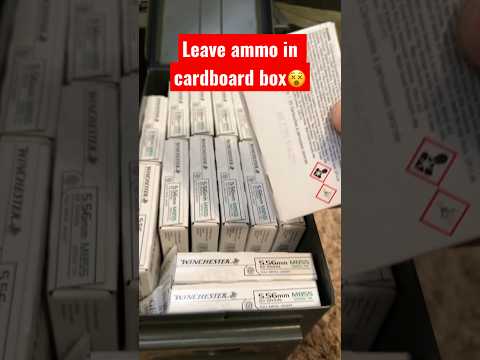
Q: Are bulk orders more prone to defective rounds?
A: No, the probability per round is identical, but a case amplifies the impact of a single bad lot, so inspect a sample from each box for issues like setback or dents.

What’s the Best Way to Split a Case Between Friends?
The smartest move is to split ammo by the case using exact box counts, not by weight or estimated round numbers. Decide the divisor before the order arrives, based on each friend’s caliber needs—if one shoots 9mm and another .223, divide the case into dedicated groups, not mixed lots. Always split by sealed boxes to keep lot numbers intact for accuracy and potential warranty claims. Use a simple spreadsheet or group chat to assign boxes per friend, then settle payment via Venmo before pickup. This prevents shorting anyone on a favorite grain weight and ensures each person pays only for what they actually shoot.